
Clinicians can only treat based on what they know. Uncover what is happening at a cellular level for more informed decisions.
Do less with more information.
Dynamic measurements of lactate and tissue oxygenation enable targeted therapies at the right time.
Detect earlier before
patients become critical.
Infrequent sampling is not
always enough. Continuous monitoring provides insight to make treatment decisions
before its too late.
A single probe for lactate, glucose, ketones, and tissue oxygen providing insights not currently available.
Making the invisible
visible.
FOUR SIGNALS, ONE COMPLETE STORY
Tissue Oxygen
Reflects the oxygen available in cells and quickly detects imbalances between oxygen supply and demand.
More sensitive and responsive than pulse oximetry.
Lactate
Context to enable earlier detection of tissue hypoperfusion and real-time resuscitation guidance.
Less costly and more informative than blood draws.
Glucose
Allows dangerous glucose swings, especially hypoglycemia, to be caught earlier for better outcomes.
1 out of 3 hospitalized patients has diabetes.
Ketone
Earlier detection of diabetic ketoacidosis and metabolic decompensation, allowing real-time treatment adjustment.
Rate of rise provides insight into destabilization.
OXYGEN
in the cells
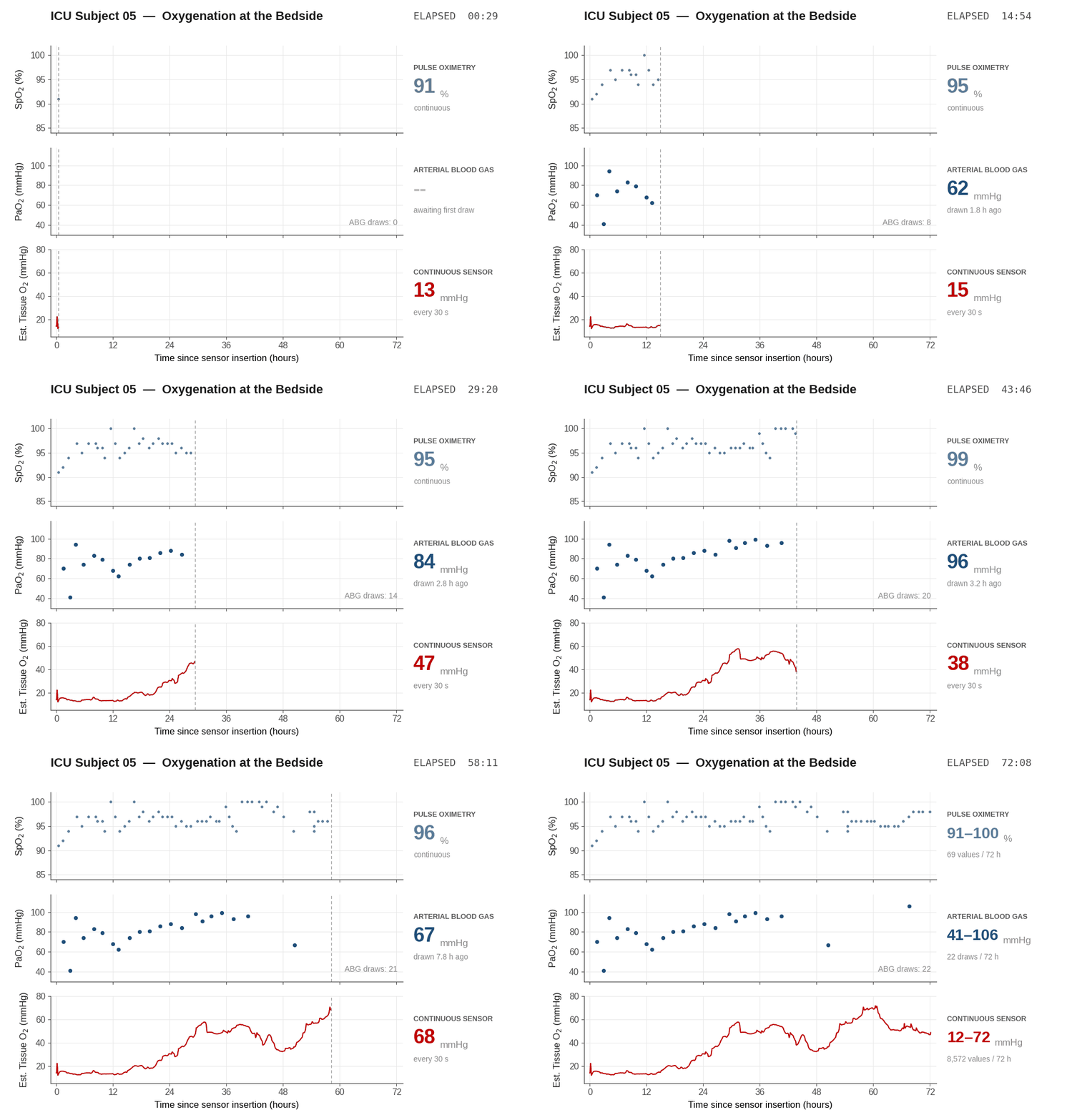
Lactate and Tissue Oxygen: An Important Diagnostic Pair
